
Pastor PJ Berner - July 13, 2025
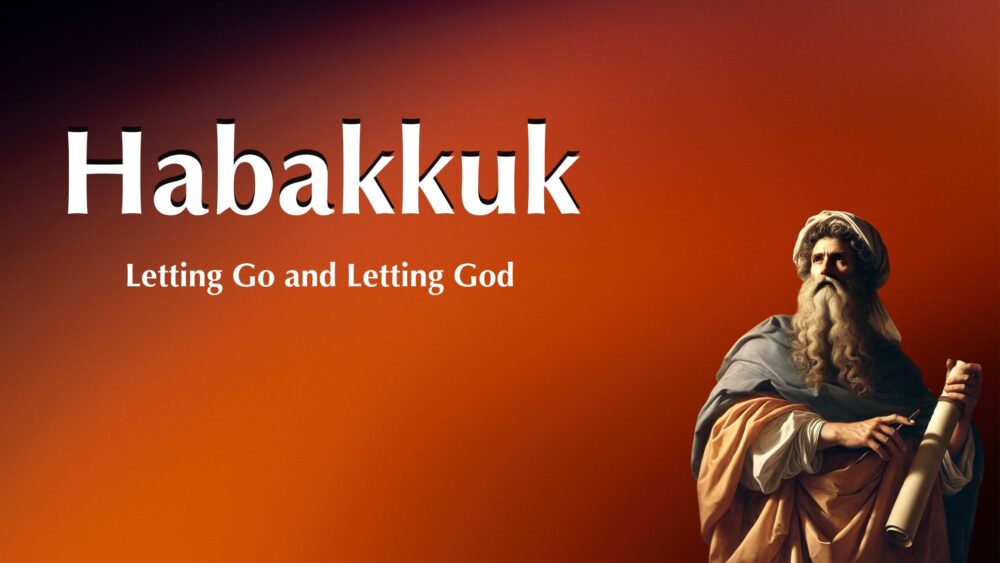
Habakkuk
Sermon transcript
30 min read · Automatically generated, so it may contain errors
0:03Please be seated. And as you are, before we get into it, inside your bulletin this morning, you're going to find a card. I'm going to ask you to do me a favor this week. This is a card with the information about all of our services, who we are as a church. I would love for you to take this and plan on giving it to somebody this week.
0:21Not somebody in this room, somebody outside this room. Somebody who doesn't know about who we are. One of the things that is indicative of our church is that we want to be a church that is about reaching people for Christ. In fact, our mission is to be reaching, teaching, and training. And so we want to be a church that, that grows, and we want to be a church that grows through seeing people come to faith in Jesus.
0:42And so take this invite card— that's why it's in your bulletin, it's going to be in the bulletins in the weeks coming up— and give it to a neighbor, give it to a coworker, give it to somebody and say, hey, I'd love for you to join us at Compass Bible Church this week. Here's some information and the times on there as well. If you do that, that would be a huge blessing to your church family and to me as your pastor for sure. Well, I wonder if you've ever felt like you know better than God.
1:07The laughs in the room convince me that you, you probably have felt that from time to time. You may not say it that way, but we've felt that. And let me explain a couple of areas that I've felt that before. Times that I felt like, God, what are you doing? Right?
1:23I love them now, but 8 years ago and some change, when we found out that we were having twins and we already had 3 kids, that's a moment where I was like, God, you sure about this one? What are you doing right now? That was one of those moments in my life. Or when I lost, more seriously, when I lost one of my dear friends back in California who died and left his young family behind, that was a moment You know, I wrestled with God on that one. Or maybe you've had a situation like this where in the early weeks of COVID you were wondering, okay God, what in the world are you doing?
2:00Or perhaps I could recount, and I won't, but all of the different ministry situations, the difficult times in ministry that I've had to sit in my office and just pray and say, okay God, I don't understand what you're doing here. I think all of us have probably had times where we feel like maybe we know better than God. And there are times in life we experience these situations and those are the times that we ask the questions of God. God, why? Why now?
2:28Or why not? Or what even still matters anymore? Y'all, when one of our fellow pastors died suddenly, as I was just alluding to a moment ago, There were weeks afterwards that I struggled to figure out how to regain any sort of sense of normalcy in ministry. What even matters anymore? How do I show up and go through the motions and do these things that we're doing?
2:53I was the college pastor at the time. How do we do games with college students when this guy who was 39 years old just died and left behind his family and kids? Times like that, God, what are you doing? Habakkuk is a book for those times. It's a book for those times; those times of losing a job, or losing a loved one, or losing a child.
3:13Those times of marital strife. Those times when you have to trust God when you're not really sure what God is doing. That's what Habakkuk helps us do. Habakkuk helps us trust God when we're not really sure what God is doing. Let's get into it.
3:30As the book opens, before we get to the text itself, just to remind us of the, the nets, the nuts and bolts of the book here. Its author is the title, Habakkuk. Habakkuk was a prophet. He was a prophet who had a deep concern for justice, as we're gonna see in the book. He was a prophet who was also a theologian, as we will find out in the book as well.
3:52And he was also maybe even potentially a Levite, as he had a very knowledgeable depth of understanding of the past of of God's work, and we'll see some of that in chapter 3. But Habakkuk is the author, the date around 640 to 615, so we're right in between the 2 exiles. 722 BC, so before this, the Northern Kingdom Israel was carried off by the nation of Assyria. They're judged by God and carried off into exile. Well, in 586 BC, the Southern Kingdom, the Kingdom of Judah, is going to be taken out by Babylon.
4:21God is going to judge the Southern Kingdom of Judah, they're going to be taken into exile. That is really the subject of the book, is God's going to be telling Habakkuk that that's what he's going to be doing here. But Habakkuk wrote right kind of in between there, 640 to 615, that timeframe BC. The audience is Habakkuk. And no, I didn't accidentally transpose, transpose the author or the title here.
4:42This is a conversation between Habakkuk and God. Habakkuk doesn't prophesy to anyone in this book. God prophesies to Habakkuk. God and Habakkuk have an intimate moment that we get to eavesdrop on. And it's going to help us understand how God is a God that we can trust even when we don't know what he's doing.
4:58So the audience of the book is the prophet himself, Habakkuk. And I've been going through the key words with these different books that we've been studying and the key word here that I want you to take away is the word trust. The word trust. And there's a lot that goes into our trust or our faith, isn't there? Especially during those times that we don't understand what God is doing.
5:17Open up with me in chapter 1. It says this: that Habakkuk the prophet saw. O Lord, how long shall I cry for help? This is Habakkuk addressing God, addressing Yahweh. O Lord, how long shall I cry for help and you will not hear?
5:34Or cry to you violence and you will not save? Why do you make me see iniquity? Why do you look idly at wrong? Destruction and violence are before me, strife and contention arise, so the law is paralyzed and justice never goes forth. For the wicked surround the righteous, so justice goes forth perverted.
5:53Habakkuk addresses God with these complaints about the context, what was going on all around him at this time, which in the nation of Israel was not a time of moral and spiritual prosperity, but a time of moral and spiritual decay. There was rampant idolatry, there was child sacrifice taking place, there was Oppression. Jeremiah describes in Jeremiah 7 oppression and murder and theft and adultery and idolatry and deceitfulness. Habakkuk's looking around at all of this saying, God, what are you doing? In fact, his question is one that maybe makes us squirm a little bit.
6:31God, why do you idly look at wrong? He says the law is paralyzed. Again, Habakkuk, the prophet-theologian, knows who God is; that God is a God of justice; that God's a God of law. In fact, if we go back to Deuteronomy 19, you may have that chapter memorized and if you do, great! The rest of us, we'll just need a brief reminder here.
6:55Tongue in cheek, nobody has that memorized, I imagine, in the room. But Deuteronomy 19 is all about the laws of justice; what is right and what is good and what Israel should have been doing. And Habakkuk says the law is paralyzed. Justice has been perverted.
7:13I wonder if we can resonate with any of that as we look around our world today. Now, we are not Israel; you've heard me say that multiple times. America is not Israel; Israel is not America. And the church is not Israel.
7:28Still, we can resonate, I think, with the feeling of the prophet here. As we look around, even maybe at a macro level, and we see just the rampant celebration in the, in the the bloodlust for the murder of the unborn through abortion, or we look at the abuse that happens in different sectors, or we look at the riots that take place, or we look at these other examples of injustice all around us and we say, God, are you— do you see this? But how about on a micro level? How about in our own lives personally? Maybe you're in a work environment where there's rampant corruption at work.
8:08God, are you— do you see what's going on here? Do you notice what's going on here?
8:14Or perhaps there's sins that others have committed against you and you're going, God, are you not going to do anything? Or maybe you've worked really hard and demonstrated a work ethic with great integrity and it's just gone unnoticed and unrewarded.
8:31If you can't think of any situations yourself that parallel Habakkuk's, just open up your news browser later on today and you'll be flooded with them.
8:40Like Habakkuk, we can grow frustrated with what seems to be God's apparent idleness at times. Those times when we don't know what God is doing and it's difficult to trust because it looks like God is just not doing anything. It looks like God's just idle. And we, like the prophet, can sit here and say, God, Why don't you do something? But like Habakkuk, like Habakkuk would come to know at least, we need to learn and we need to understand that God is never idle.
9:08He's always actively ordaining and working out his perfect and sovereign plan. So our first point this morning, as you think about trusting God when you don't know what he's doing, is this: humbly acknowledge God's sovereign plan. Humbly acknowledge God's sovereign plan. I can't tell you the number of times that my plan has been consistently foiled by God's plan. And you know what?
9:3120/20, looking back on it, I'm always thankful for that. In fact, if I had my way, I probably wouldn't have the job that I have, the wife that I have, the family that I have, and perhaps not even the faith that I have.
9:45But because of God's perfect and sovereign plan, I do have those things. But that doesn't mean that I always liked his plan. It doesn't mean that I was always sitting there going, oh yeah, this makes total sense, God. In a moment of condescension in our text here, God is going to answer Habakkuk and actually clue him in on what he actually is doing here. God owed Habakkuk no response but he gave him one anyways.
10:11And in giving him one, he gives us one to help us understand something about who he is. Look at verse 5: Look among the nations and see, Habakkuk, Wonder and be astounded, for I'm doing a work in your days that you wouldn't believe even if I told you. He's going to tell them anyways. For behold, I'm raising up the Chaldeans. Okay.
10:32Chaldeans is another name for the Babylonians. That bitter and hasty nation who march through the breadth of the earth to seize dwellings not their own. They are dreaded and fearsome. That word fearsome is the same word that's used in relation to the fear of God. He's saying they instill that fear in others.
10:51Their justice and dignity go forth from themselves. Jump down to verse 11. They sweep by like the wind and go on, guilty men whose own might is their god. Now at this time in history, the Babylonians were really just kind of coming on the scene, but they were known to be the, the next power player. Assyria is on the way down.
11:13And in fact, the Babylonians are going to be the ones in 612 BC who take the Assyrians out completely. And so Habakkuk has heard enough about the Babylonians to know that this is not going to be good news. But God says, look, they're powerful, he says in verses 6 and 7. They are devastating, verse 8. They are brutal in their execution of their plan and their attacks, in verse 9.
11:37They are their own god. Even, whose own might is their god. As we're thinking about God's execution of his sovereign plan, I wonder, have you ever been shocked by something that God has done? Have you ever just been slack-jawed? Just your mouth is open going, God, how is this a part of your plan?
11:58That would have been the impact of what Habakkuk was hearing God say to him at this point. We read it on the backside of the cross knowing the rest of the story, as Dave Harvey used to say, And it loses its impact for us. But this would be like, and again, not to conflate America and Israel, 'cause they're not the same, but this would be like God saying to you today, hey, you know what? I'm going to use, I'm going to use China to come into America and I'm going to use China to completely destroy everything here that you know and see because of the great wickedness in this nation.
12:35It's that moment that so often happens where we just say, God, what are you doing? And again, remember that's what Habakkuk's about. It's a book about trusting God when we don't know what God is doing. What does Proverbs 3:5-6 say? King Solomon says this, he says, trust in the Lord with all of your heart when it's going your way.
12:54I'm glad you're chuckling because if your Bible says that, get rid of it. That's not what it says. King Solomon says, trust in the Lord with all your heart, and then what comes next? Do not lean on your own understanding. Have you ever wondered why he says that?
13:15It's because so often you need to trust God when you don't understand God.
13:22That's what's going on in Habakkuk chapter 1. That's what might be going on in your life right now. You're sitting there saying, God, I don't understand. I don't, I don't know why my marriage is the way it is. I don't know why my children have rebelled against me.
13:35I don't know why I got this health diagnosis. I don't know why, God, I don't, I don't understand.
13:43And I just find it so encouraging that we have a passage like Proverbs 3 that says, you know what? Trust the Lord even then and don't lean on your own understanding.
13:55Because we serve the God who says, my ways are not your ways.
13:59When the flood comes and takes out dozens of children, when the accident happens, when good friends move away, when you don't get the job, when the political candidate you voted for doesn't win the election, when you need a new roof, When the medical bills mount, when the pregnancy test comes back negative again, when rent goes up again, God is still sovereign in those times. His plan is still active. He's not passive. He's not asleep. He's not unaware and he's not disinterested in what you're going through.
14:41He's working his plan to perfection in your life. It's these moments that we have to trust and acknowledge humbly his sovereign plan. We have to remember his plans when it doesn't feel like we should trust him. Trust in the Lord with all your heart and do not lean on your own understanding. That was something that Habakkuk was going to need to do and need to learn, but he wasn't going to get there right away.
15:02In fact, look back in our text at verse 12. Habakkuk says this, he says, are you not from everlasting, O Lord my God, my Holy One? We shall not die. O Lord, you have ordained them as a judgment, and you, O Rock, have established them for reproof. You who are of purer eyes than to see evil and cannot look at wrong, why do you idly look at traitors and remain silent when the wicked swallows up the man more righteous than he?
15:30Habakkuk hears God say, Habakkuk, I'm not idle, this is what I'm doing. And Habakkuk says, you can't do that. I wonder if you've ever been there with God. If we're honest with ourselves, I'm sure we have.
15:46Not only questioning God, why are you doing this? But God, you shouldn't do this.
15:51This doesn't seem like this is what's best.
15:55Habakkuk appeals to the covenant nature of God here in chapter 1, verse 12. He says, you Lord, you are from everlasting. O Lord, Yahweh my God. Yahweh, the covenant name of God; that relationship with his people. And he says, you are from everlasting.
16:10In other words, he's appealing to God's immutability, that God, you never change.
16:16And he says, but what you're saying you're going to do seems like you're shifting. And he goes on and he says, we shall not die? His understanding of the Babylonians were that when they came through, there was nothing left behind. When they set their sights on a target, they decimated that target completely. And so Habakkuk's saying, God, you're going to bring them against us?
16:37That would imply that we're going to be no more at all. And Habakkuk's saying to God, appealing to his covenant relationship again, saying, we're not going to die. In fact, back in Leviticus 26:44-45, even as God is talking about the judgment that he's going to bring upon Judah if they're disobedient to the law, which is why he's going to judge them here, but in Leviticus 26:44-45, God told the people of Israel, and the people of Judah, listen, I'm not going to destroy you completely. I won't make a complete end of you. And so that's why Habakkuk says, we're not going to die?
17:10He says, you've used them for reproof? Really? It's them? And then he reminds God of God's character, in case God forgot. You have eyes that are too pure to see evil and cannot look at wrong.
17:26Habakkuk would seem to be implying that that would imply that he can't use the Babylonians because the Babylonians are somehow too evil for God to ever use.
17:37But if God can't use evil and wicked people in the accomplishment of his plan, then God could never do anything.
17:47It's an uncomfortable element of his sovereignty, but it's true. We see it abundantly clear right here. God is the one, and by the way, God is not passive in his sovereign plan. He is the one actively raising up the Chaldeans. He's the one that he says elsewhere is going to whistle for them as though from the ends of the earth.
18:06God is bringing this to be and the prophet just can't wrap his mind around this. He can't understand how this can happen. In fact, he pits God against Nebuchadnezzar. He says in verse 14, you, Lord, you make mankind like the fish of the sea. They're your creation.
18:21But then he pits him against Nebuchadnezzar. He says, he, verse 15, brings all of them up with a hook. He drags them out with his net. He gathers them in his dragnet. So he rejoices and is glad.
18:33God, the ones that you have made, he's putting himself out there as the one that they belong to him now. You're okay with that, God? How can you be okay with this? Therefore he sacrifices to his net. He makes offerings to his dragnet, for by them he lives in luxury and is rich in his food.
18:51Is he then to keep on emptying his net and mercilessly killing nations forever? I'm going to take my stand at my watch post and station myself on the tower and look out to see what he will say, God, and what I will answer concerning my complaint. I appreciate Habakkuk in his honesty right here. I don't think this is a pride that's a self-centered pride, but it's still pride nonetheless. He's positioning himself ready to debate God.
19:24He says, I'm going to listen to see what God's going to say and then I'll figure out what I'm going to say back to God.
19:31God's going to respond, as we'll see here momentarily, by reminding Habakkuk that there's a bigger picture that he's not seeing.
19:39That's so important for us, y'all, as we're looking to trust a God whose ways we don't always understand.
19:46It is immensely important that we remember our finitude and his infinitude. It's immensely important that we remember that we are the creature and he is the Creator. It's immensely important that we remember that his ways are not our ways and his ways are perfect so that even when we can't see the end, we can still trust him.
20:08Another facet of God's sovereignty in our acknowledgement of his perfect plan is to acknowledge that he also always knows better. Point number 2, humbly admit that God knows better. Humbly admit that God knows better.
20:24If you have kids, you understand this, right? You understand when you give instructions to your kids and your kids just look back at you like you're from outer space. You tell them to go do something and they look at you like, certainly you can't want me to do that. That is the dumbest thing I've ever heard on the face of the planet. And you look at them and you think, you know, you can do it.
20:46You can do it with a sore butt or you can do it just willingly. Choice is yours on this one, bucko.
20:54That's like us and God so often. He tells us what he's doing or what we need to do and we're like the impetulant child that looks at him and says, you can't be serious. You can't be serious. And that's a little bit of what Habakkuk's doing here, though I think his motive is good. His motive is still for the glory and justice and holiness of God, but he's missing this key component that God is the God who knows better.
21:19Habakkuk has put God in the docket and is calling God to explain and justify himself.
21:26How often, y'all, have our actions and reactions to circumstances in life revealed a heart that questions the Lord? We may know in the vacuum, we may know on Sunday morning that God is sovereign and has a perfect plan and works it out according to his will and his perfect plan is always good. We may know that on Sunday morning, but on Tuesday afternoon when the bad news comes, our reactions and actions betray that we don't necessarily always believe that.
21:55When we complain about our spouse or our children, When we complain about a situation at work, when we stew in frustration, when our plans don't come to fruition, when we make rash decisions without counsel, just trying to get out of a trial as quickly as we can, instead of sitting in it and saying, God, what are you trying to maybe teach me right now?
22:20When we're not praying, Y'all, these are all ways that we are effectively communicating to God, God, I know better than you do.
22:32When we grumble about our circumstances, y'all, or fantasize about a different reality, we are, in essence, telling God, you made a mistake and I know better.
22:44God answers Habakkuk again; he condescends to the prophet. He doesn't consume him in fire. He lovingly, graciously, mercifully responds to the prophet in verse 2. Says, the Lord answered me, write the vision and make it plain on the tablet so he may run who reads it. For still the vision awaits its appointed time.
23:02It hastens to the end. It will not lie. If it seems slow, wait for it. It will surely come. It will not delay.
23:11Behold, his soul is puffed up. It is not upright within him. But the righteous shall shall live by his faith. God's response to Habakkuk is such that he says, Habakkuk, you need to trust that I do indeed know better. And listen, what I'm about to tell you, I want you to write it down.
23:28And he says that because he says it may not come as quickly as you want it to come. It may not happen according to your timeframe. But Habakkuk, I want you to write this down and know for sure that it will come. And in the meantime, Habakkuk, here's your job. You ready, Habakkuk?
23:44Your job is to live by faith. That probably, that verse sounds familiar to you. The righteous shall live by faith. Paul picks it up in Romans and applies it to salvation. That the righteous person is saved by his faith.
23:59The writer of Hebrews is going to grab it and he's going to apply it to our endurance and our perseverance, our steadfastness throughout our lives as believers. That the righteous adheres to Christ and sticks with Christ. By faith? Well, that comes all the way back here. This is where it begins, with God's words to Habakkuk.
24:17As Habakkuk is looking at God going, what are you doing? What are you doing? Are you sure about this, God? I think I might know better than you do on this one, God. God's going to say, Habakkuk, I do have a plan that you can trust.
24:31But as you wait, you need to trust that my plan is always better. And you're going to do that faith. You're not always going to be able to see what God is doing with the trial in your life. You may never, this side of eternity, know what God is doing with the trial in your life. But you can maintain a confidence that he is doing something.
24:53You can have a faith that he is good. You can have a faith that says, God, I'm going to trust you and in the meantime, I will remain faithful.
25:04Patient. One of the best ways that you can humbly admit that God knows better is by staying patient in the midst of the trial.
25:15God tells Habakkuk of Babylon in the rest of this chapter, he says, they are going to get what they deserve. Justice will be done to them as well, Habakkuk. It's a reminder that, like we talked about last week, that God's perspective is eternal. And so God is not bound by our time frame. God will see to it that every sin is dealt with, that every offense, that every injustice is addressed.
25:42And that's what he's reminding Habakkuk. Write the vision down, Habakkuk, I'm going to deal with them. In fact, he goes in, in the rest of chapter 2, with these woes, these curses of judgment against the Chaldeans, the Babylonians. And God is going to deliver this justice. He's going to say there in verse 16, you will have your fill of shame instead of glory, speaking of the, the ruler.
26:02There of Babylon. You will have your fill of shame instead of glory. Drink yourself and show your uncircumcision, the Gentile nature of these, these evil people that were coming against God's people. The cup in the Lord's right hand will come around to you. The wrath that he is using you to execute will be executed upon you, and utter shame will come upon your glory.
26:22The violence done to Lebanon will overwhelm you, as will the destruction of the beasts, so forth and so on. So God says to Habakkuk, I will deal with Babylon. They will know that I am God. In fact, he goes on to say, the whole earth will be full of the glory of the Lord, verse 14, the knowledge of the glory of the Lord as the waters cover the sea. And so Babylon, this nation that was all about their own glory, would be humbled and their glory would be supplanted by the glory of the Lord.
26:52Again, God's saying, Habakkuk, it's going to happen. You may not live that long. It may not be according to your timeframe, but trust that it will. Y'all, when we don't know what God is doing, one of the best ways that we can trust that his will and his way is better is by remaining patient and living by faith. That's not possible in and of ourselves.
27:12Our flesh is going to grate against that with every ounce of its being. It's going to say, man, I don't want to be patient. I don't want to live by faith. I want results. But with the Spirit dwelling within us, we can overcome that.
27:28This is what it means that, as Paul writes in Philippians chapter 4, that we can have a peace that surpasses what? Understanding. Which would imply that there's a peace that we need when we don't understand. That can be ours through the Spirit. Or we can live by faith in the promise that Paul records in Romans 8, that God is working all things according to our good.
27:51That is, that we would be made more like Jesus.
27:54And so we can wait and we can trust in the midst of the plan and say, God, your way is better than mine. I wouldn't do things this way, God, but I'm going to trust that your plan is better.
28:08When you're tempted to complain about a circumstance in life, perhaps stop and ask yourself if you might be implying that you know better than God.
28:18Because we need to remember God's place and our place. And that's where he ends in chapter 2. He says, look at verse 20, but the Lord is in his holy temple. Let all the earth, including you, Habakkuk, keep silence before him. This is that moment where God is saying, okay, enough is enough.
28:37You've challenged my goodness, you've challenged my holiness, you've challenged my character, you've challenged what I'm doing. Now it's time to simply trust me and submit to me.
28:48The good news is, is Habakkuk is not Jonah. Habakkuk gets the message. In fact, look at chapter 3 with me. It says this, a prayer of Habakkuk the prophet according to the Shigionoth. And you're all better off because I mispronounced that Hebrew word for you.
29:05But Habakkuk's going to respond with this prayer, and I love the prayer. He says, O Lord, I have heard the report of you. And your work, O Lord, do I fear. In the midst of years revive it, in the midst of the years make it known. In wrath remember mercy.
29:22And so the prophet appeals back to what he knows to be true about God now. He's appealing back saying, God, you are right. I know who you are. I know. And he's going to go on in chapter 3 here and talk about the works of God, specifically during the Exodus.
29:37How God led his people out in such a powerful way from slavery in Egypt and brought them into the Promised Land. And Habakkuk is going to say, Lord, I'm asking you to bring those years back in the midst of your, your, your time right now, the judgment that you're bringing. Lord, I would ask that you revive the good times that we've had, the goodness that you've showed to your people.
29:58And so Habakkuk prays, in your wrath, Lord, please remember mercy too.
30:06The vision that Habakkuk saw here and heard from the Lord encouraged him in the face of the impending judgment at the hands of the Babylonians, that God was going to in fact see to justice being administered. And it reminded him of God's past faithfulness in taking care of his people, which gave him the confidence that he would continue to do the same. So when we don't know what God is doing, there's that moment that we can get to a sense of peace. And this indeed is part of the peace that surpasses understanding, that's rooted in our understanding and our memory of all the good that God has done to us in the past. Where we can get to the place of saying, God, if you've been faithful in the past, you'll be faithful to me still.
30:49I want you to note here that God doesn't tell Habakkuk, Habakkuk, it's all going to be okay.
30:56He doesn't tell Habakkuk, hey Habakkuk, the Babylonians aren't as scary as you think they are.
31:01He doesn't tell Habakkuk, hey, everyone you love is going to come through this thing fine.
31:09Habakkuk is still going to have to face the reality of the impending judgment that God was bringing but he's gotten to the place now, with God's gracious help, to say, okay, To live by faith means to trust in who you are. And part of that means rehearsing who we know him to be, who he's proved himself to be time and time again over our lives in the past. So our final point this morning is this: humbly remember God's past kindness. Humbly remember God's past kindness.
31:40To help bolster and strengthen your trust in God when you don't know what God is doing, remembering how faithful he's been to you and your family in the past, is going to help you walk by faith in the moment, that he will be faithful to fulfill his promises in the future.
32:03When the twins were newborns, every morning they woke up just irate that they had not yet been fed.
32:15We fed them every day. It's like, why don't you remember this? Well, because all the brain chemistry and everything else like that, we can't expect too much of infants, right? They don't know because they don't remember because they're not there yet in their development. I remember Ameda, I think, shared this with our ladies, but there was a professor that we had back at Master's who, he and his wife adopted a little girl from an Eastern Bloc country, or a Soviet Bloc country, and they brought her home.
32:42And they took her to church and they're sitting in church and her number flashes up on the screen that says, hey, you need to come to the kids ministry wing. So they get up quickly. This is their, her first Sunday at church. And they go back into the kids ministry wing and they open the door and they're wondering if maybe she just is scared and she's crying and she's upset because this is all new to her. Well, no, she's happy as she could be.
33:03She's sitting at the table, in fact, and she's got so much food in front of her. And she's just mowing down on all this food. It was every single other kid around the snack table that was in tears.
33:16The reason being, she grew up in a situation where she had to fight for her food. So when they passed out snacks, she was like, game on! And all these little Southern California kids that had no clue what was going on, they just got mugged by this little kid from, from Eastern Europe. And she just grabbed it all and brought it in. Why?
33:38Because she had not been shown the past kindness enough to know that, you know what, you're going to have food today and you're going to have food tomorrow and you're going to have food the next day too.
33:49Y'all, we need to remember God's past kindness to us in the times, especially when we don't know what he's doing, because it reminds us that he's good and he loves us and he's going to continue to provide for us. Don't hear me say the trial is going to be taken away immediately, or perhaps this side of eternity.
34:09That's not what we read about in Habakkuk. The Babylonians still show up.
34:17But I want us to land here to understand why this is, how this all fits together with, with what Habakkuk says in the end. Look at verse 17 with me.
34:28He says, though the fig tree should not blossom, nor fruit be on the vines, the produce of the olive fail, and the fields yield no food, the flock be cut off from the fold, and there be no herd in the stalls. He's depicting an apocalyptic wasteland here. In fact, this is the imagery of a war-torn country. This is what Babylon would do to the nations that they came through. They would destroy the crops, they would destroy the herds, they would take away all the sources of what Israel needed to be able to subsist, to be able to simply live.
35:02Habakkuk says, even if that happens, God, he says in verse 18, yet I will rejoice in the Lord. I will take joy in the God of my salvation.
35:20That's the key here. When you remember how faithful God has been to you in the past, it reminds you that God will always be faithful. And there is a promise, if you are in Christ, that is yours this morning, that no trial, no tribulation, no amount of suffering, no loss can ever take away from you. And that promise is that one day you will go to be with him forever. Forever, and there will never be another Babylon in your life.
35:51There will never be another trial that comes against you. There will never be another sickness. There will never be another moment of strife in a relationship. There will never be another moment of injustice in your life.
36:09And then you will be with him, and in the twinkling of an eye, Revelation 21 will be here and you will realize, man, this is what it is for God to be with us as our God, for us to dwell with him. He's going to wipe away the tears. There's no more sickness. There's no more sorrow. There's no more devastation.
36:25There's no more enemies. There's— it's, it's gone.
36:31And not just for a— it's not a vacation that you're headed towards. It's an eternity that you're headed towards that way.
36:40God's been faithful in the past; he's shown himself that way. Part of the reason is, is so that when we don't understand what he's doing right now, we remember that that's the promise that ultimately matters for us and that nothing can take that promise away. Nothing will change that. If you are in Christ, you are in Christ forever and he will see to it that he brings you home to be with him.
37:06The righteous can live by faith and hold on to that no matter what happens.
37:11So Babylon may come now, but they won't be there then.
37:19You know, Babylon may come and take away health now, may take away relationships now, may take away a job now, but it can't take away your future with Christ.
37:33And so, in the end, we can say with Habakkuk, Lord, if you take everything and I've got nothing left, yet I will rejoice and I will take joy in the God of my salvation.
37:51I hope this morning that you know that confidence. I hope this morning that you feel that. I hope this morning that you can say, yes, I have a future confidence that I'm in Christ and I will be with him forever.
38:11If you don't have that this morning, you can before you leave this place.
38:19It's not a prerequisite of certain amount of Bible knowledge. It's not about cleaning yourself up before you come in here and sit down.
38:28It's not about who your family is currently or was or any of that.
38:35It's about surrendering in faith to Jesus. The Bible talks about it as a transaction of repenting from our sins and putting our trust in Jesus Christ as our Lord and Savior.
38:50The transaction that takes place there is that you get his full righteousness and he gets your sin, all of it. And he goes to the cross, which he's already done, and he paid the penalty so that the receipt left on your life says paid in full.
39:10If you will repent from your sins, which simply means to turn, to do an about-face, to turn from your sins, And to trust in Jesus as your Lord and Savior, that he died on the cross for your sins so that you can be forgiven, that he rose again from the dead so that you will live with him forever. This morning you can walk out with that guaranteed future promise that nothing can take from you. So I hope if you haven't done that yet, that you'll do business with God this morning.
39:37Will you stand with me as I pray and we'll be done?


